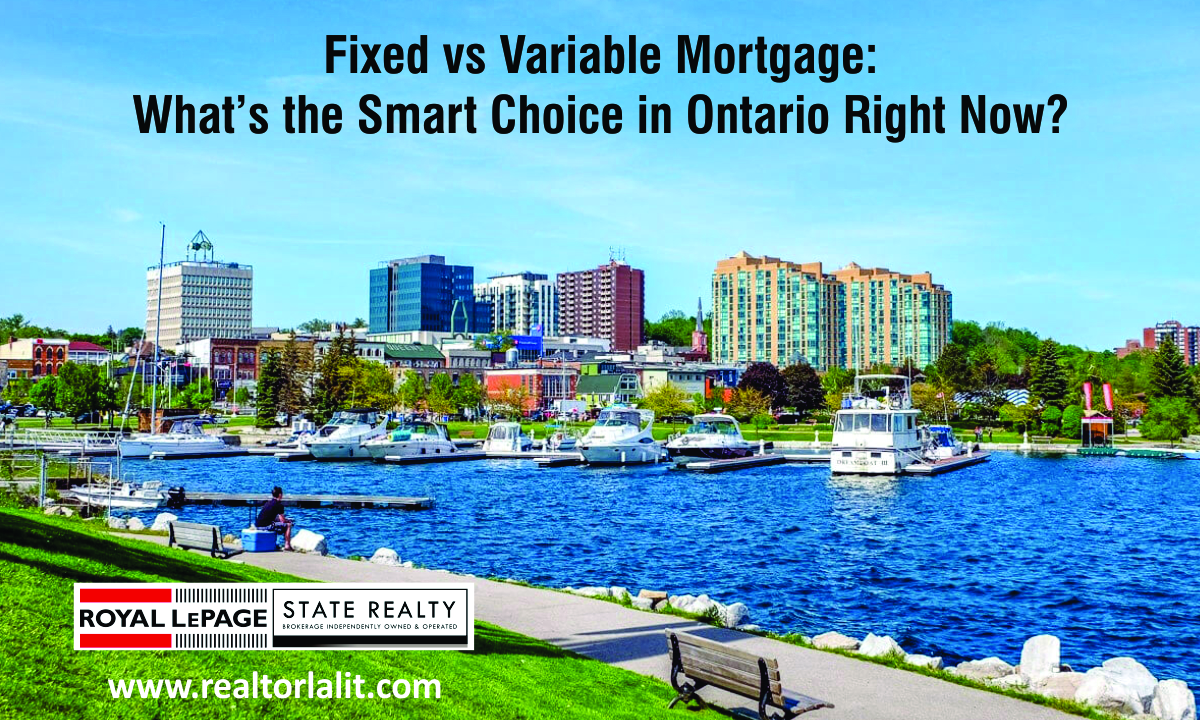
Fixed vs Variable Mortgage: What’s the Smart Choice in Ontario Right Now?
Learn the difference between fixed and variable mortgages in Ontario 2025. Discover what’s best for Hamilton & GTA buyers and investors with Lalit Sharma Realtor guidance.
Introduction
Choosing the right mortgage type is one of the most important financial decisions for Ontario homebuyers and investors. In 2025, with fluctuating interest rates and economic uncertainty, it’s crucial to weigh the pros and cons of fixed versus variable mortgages.
Whether you are purchasing your first home in Hamilton, investing in rental property in Stoney Creek, or buying in the GTA, understanding the difference between fixed and variable rates can save you thousands of dollars and help protect your long-term financial health.
As an experienced realtor in Hamilton and surrounding areas, Lalit Sharma, guide clients in selecting the best mortgage type tailored to their financial goals, risk tolerance, and property strategy.
How Fixed and Variable Mortgages Work
1. Fixed-Rate Mortgage:
- The interest rate remains the same for the entire term (commonly 5 years).
- Your monthly mortgage payments are predictable, making budgeting easier.
- Protection against interest rate increases over the term.
2. Variable-Rate Mortgage (VRM):
- Interest rate fluctuates based on the lender’s prime rate or benchmark rate.
- Monthly payments can increase or decrease over time.
- Potential savings if rates go down, but risk of higher payments if rates rise.
Example:
- Fixed 5-year mortgage on $750,000 home with 20% down: ~$2,859/month at 4% interest.
- Variable 5-year mortgage: ~$2,827/month at 3.9% interest — but could increase if the prime rate rises.
2025 Market Reality in Ontario
Ontario’s mortgage market in 2025 is shaped by:
- Interest rate volatility: The Bank of Canada has adjusted rates multiple times, causing fluctuations in variable mortgages.
- Bond yields: Fixed mortgage rates are influenced by bond market trends, keeping them slightly higher but stable.
- Lender competitiveness: Banks and credit unions offer slightly different rates, making comparison shopping critical.
Hamilton & GTA Context:
- Hamilton buyers benefit from slightly lower average home prices than Toronto, making mortgage payments more manageable.
- Popular neighborhoods like Waterdown, Ancaster, and Stoney Creek offer strong resale potential.
- Investors in Hamilton rentals or GTA condos must carefully calculate VRM risks versus expected rental income.
Pros and Cons: Fixed vs Variable
|
Mortgage Type> |
Pros |
Cons |
|
Fixed |
Predictable payments, budgeting certainty, protection against rate hikes |
Higher initial rate, less flexible if selling or refinancing early |
|
Variable |
Lower initial rate, potential savings if rates drop, lower payments short-term |
Payment uncertainty, requires financial buffer, potential increase in cost over term |
Scenario Comparison:
- $1,000,000 Hamilton home with 20% down:
- Fixed at 4.0% → ~$4,787/month
- Variable at 3.9% → ~$4,700/month initially, potential rise if rates increase
Investors might lean toward VRM to maximize cash flow, but first-time buyers or families seeking stability often prefer fixed mortgages.
How to Decide: Buyer Profiles
1. First-Time Homebuyers:
- Fixed-rate mortgages provide predictable payments and security.
- Less exposure to unexpected financial shocks.
2. Investors / Property Buyers:
- Variable rates can improve cash flow and short-term ROI.
- Requires financial buffer and careful planning in case of rate hikes.
3. Long-Term Homeowners:
- Fixed-rate mortgages reduce stress and provide long-term financial certainty.
- Useful for families and buyers planning to stay 5–10+ years.
Real-Life Examples: Hamilton Neighborhoods
Stoney Creek:
- Popular with families; homes $750k–$950k
- Fixed-rate mortgage ensures predictable payments while schools and amenities grow in value
Ancaster & Waterdown:
- Upscale neighborhoods; homes $1M+
- Variable rates may benefit investors flipping properties or renting short-term, provided a payment buffer exists
Downtown Hamilton:
- Condos and investment opportunities
- VRM can provide lower initial costs but consider rental yield vs interest risk
Risk Management Tips
- Buffer Savings: Keep 3–6 months of mortgage payments in reserve if choosing a variable mortgage.
- Rate Cap Strategy: Some lenders offer variable mortgages with a rate cap — consider this if interest rates rise sharply.
- Refinancing Options: Always check penalties for breaking a fixed-term mortgage early.
- Professional Guidance: Work with a realtor and mortgage advisor to calculate long-term costs for both options.
How I Help Buyers & Investors
As a Realtor familiar with Hamilton and GTA markets, I provide:
- Detailed mortgage comparisons: Fixed vs variable projections for your budget.
- Neighborhood-specific advice: Matching your property choice to financial strategy.
- Investment insights: Rental income projections, ROI analysis, and risk assessment.
- End-to-end guidance: From pre-approval to closing, ensuring smooth and informed decisions.
Conclusion
There is no universal answer to fixed vs variable mortgages — it depends on your financial goals, risk tolerance, and property strategy.
In 2025’s Ontario real estate market, variable rates may look attractive, but fixed rates provide peace of mind. Evaluating your situation with expert guidance is critical.
Call-to-Action:
If you are buying or investing in Hamilton, GTA, or surrounding areas, contact me, Lalit Sharma, to run detailed mortgage comparisons and help you select the option that fits your goals while maximizing your investment potential.